Searching the internet for ideas for a regency / empire coat I found this fashion plate and felt in love with it.
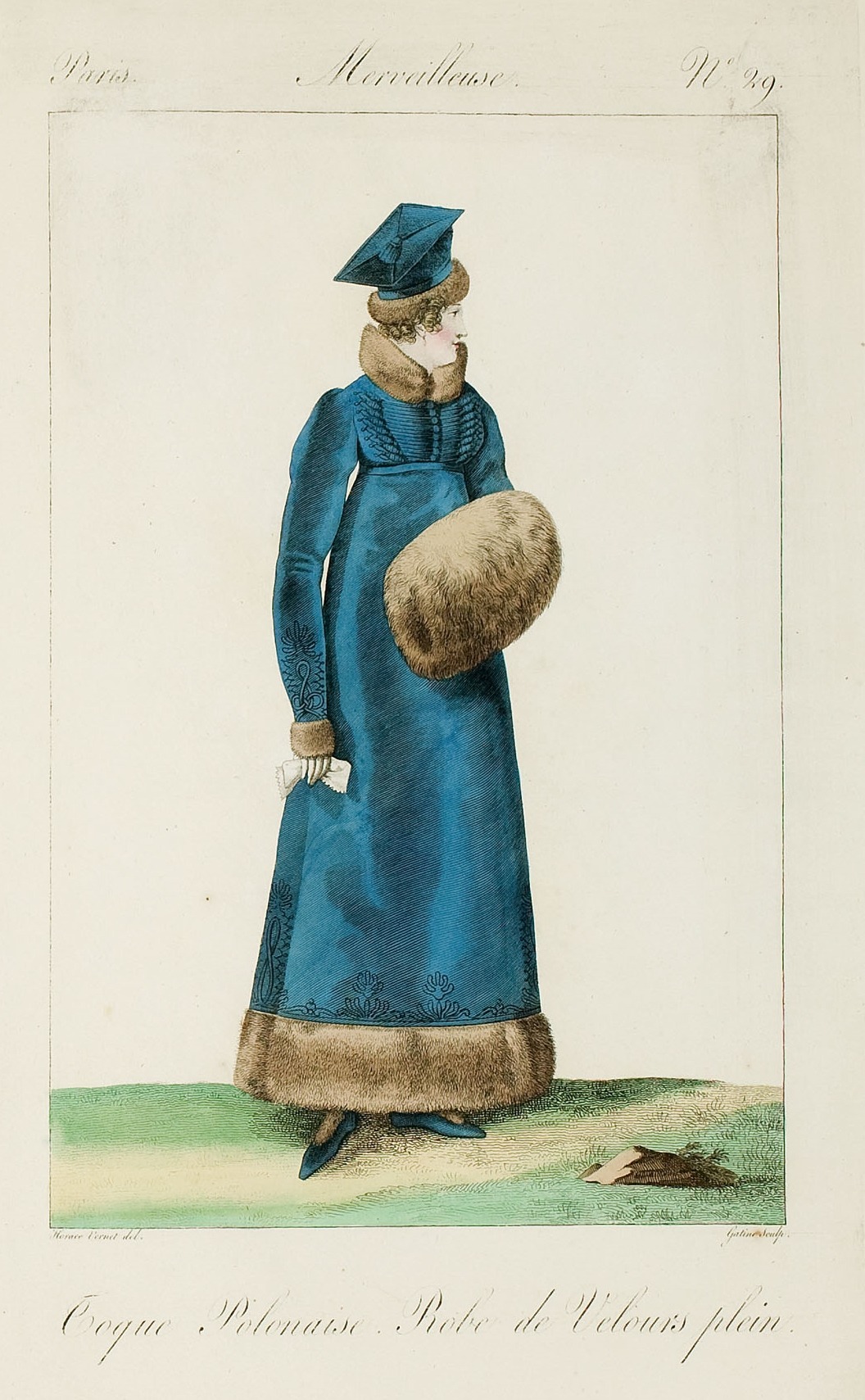
Incroyables et Merveilleuses, Georges Jacques Gatine, 1816
Continue reading
Searching the internet for ideas for a regency / empire coat I found this fashion plate and felt in love with it.
The sleeve cuff shown here is different to the cuff described in the sewing instructions, but similar.
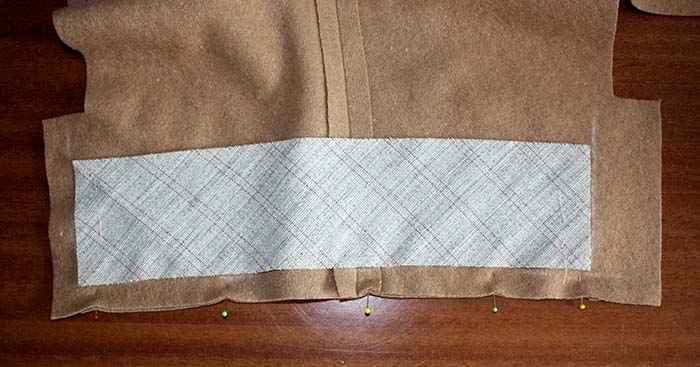
Sew together top and under sleeve along the front sleeve seam and attach the interlining with basting treads. In the sewing instruction, the interfacing reaches the bottom edge. Underneath you can see the cuff pined along the bottom edge, right sides together. I decided to use the fashion fabric for the cuff with raw edges to avoid bulk with that heavy fabric.
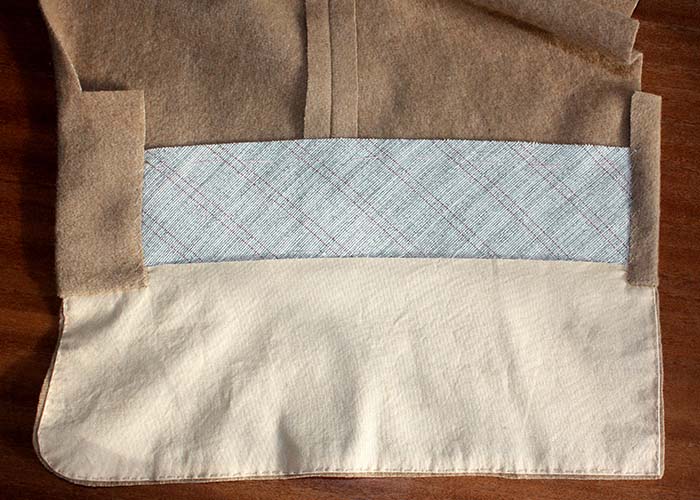
For that reason I used a cotton fabric for lining the cuff. The cuff lining is cut with seam allowances, these are turned in and pressed. The two layers are joined narrow by the edge with small stitches. Better than shown on the pics would have been to stitch down the vent facing (left side) and seam allowance (right side) first.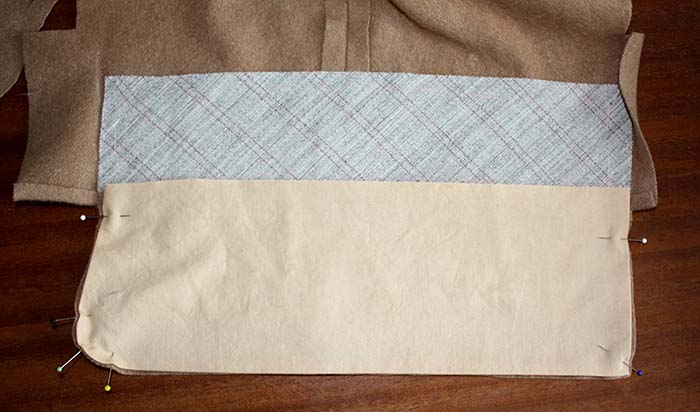
This is the side seam, the seam allowances already pressed open and notched toward the end of the seam. You can see the pressed fold on the front skirt piece, the side seam and waist seam meeting at mark (3) on the sewing pattern. Next step would be closing the fold along the edges and press again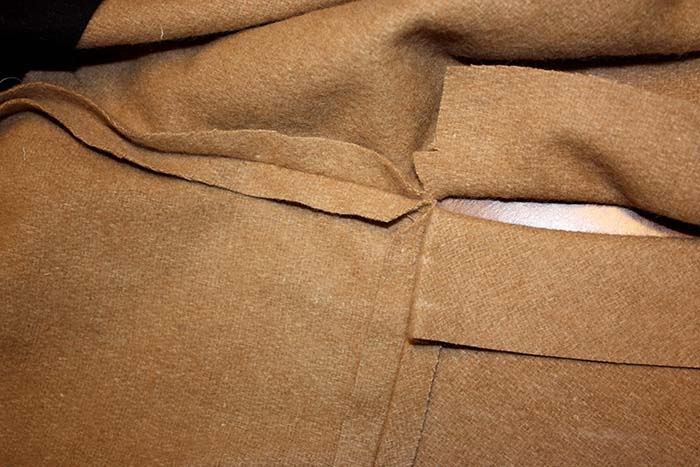
My new sewing pattern is now available on Etsy. Therefore I want to show you some additional pictures to facilitate your sewing process. I´d try to show you historical sewing techniques and processing, so again many hand stitches will be necessary.
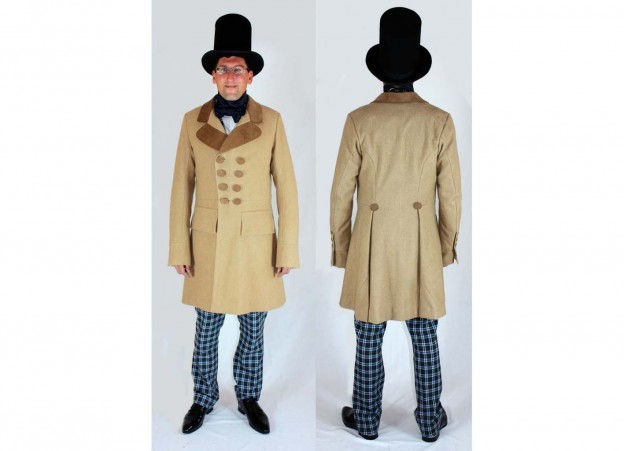
The instructions and pictures here in my blog are deviating from the illustrations in the sewing instructions, because the sewing pattern still was under the way at that time. My Frock Coat has got a lapel and collar from a cheaper pile fabric, this can be basted compared to real velvet, without showing stitching lines after removing the basting threads.
The lapel isn´t cut on, but sewn on as usual at that time.
Here you can see the front part, with the already sewn on lapel. The interfacing is lined up with the front and basted. You barely can see the pad stitched lapel.
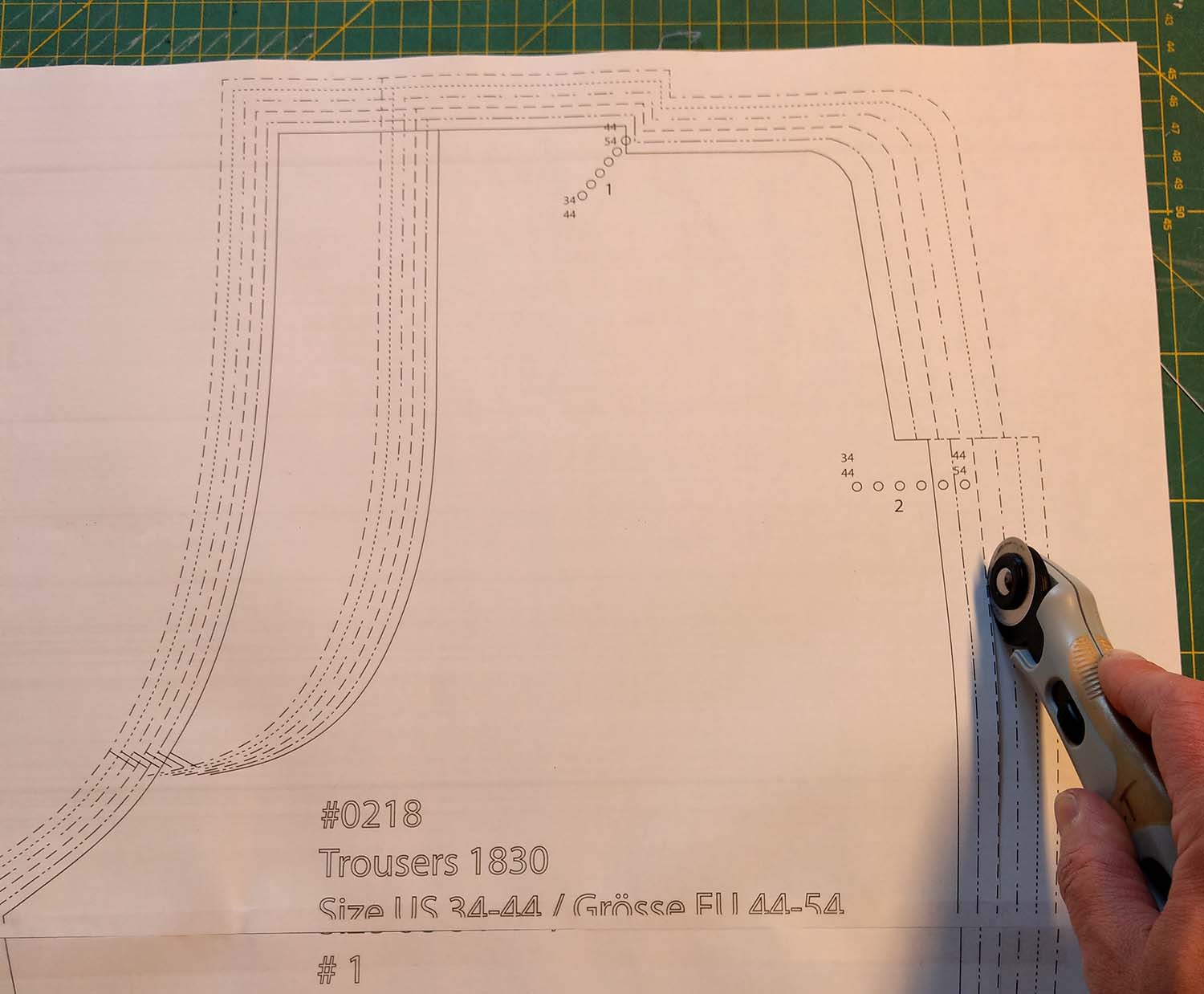
Continuing my 1830s men´s pattern collection, it´s time for matching trousers, suitable to wear with the 1830´s Tailcoat and shirt. In general trousers are easier to sew than the coats, just some pocket details are more complex. I´ll show and explain that details her in this tutorial with lots of pictures. I choose the US size 38 (EU 48).
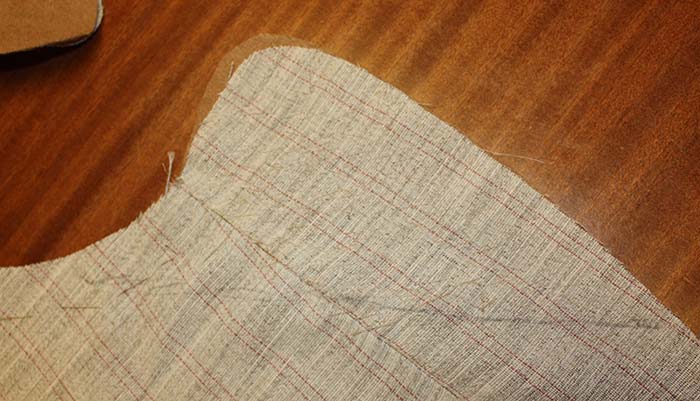
After cutting all pattern pieces, I marked the marks corresponding to the size chosen. Re-check your marks, the red arrow points on the mark I did wrong at the first time.

 English
  Deutsch